NDIS Assistance with Self-Care Activities
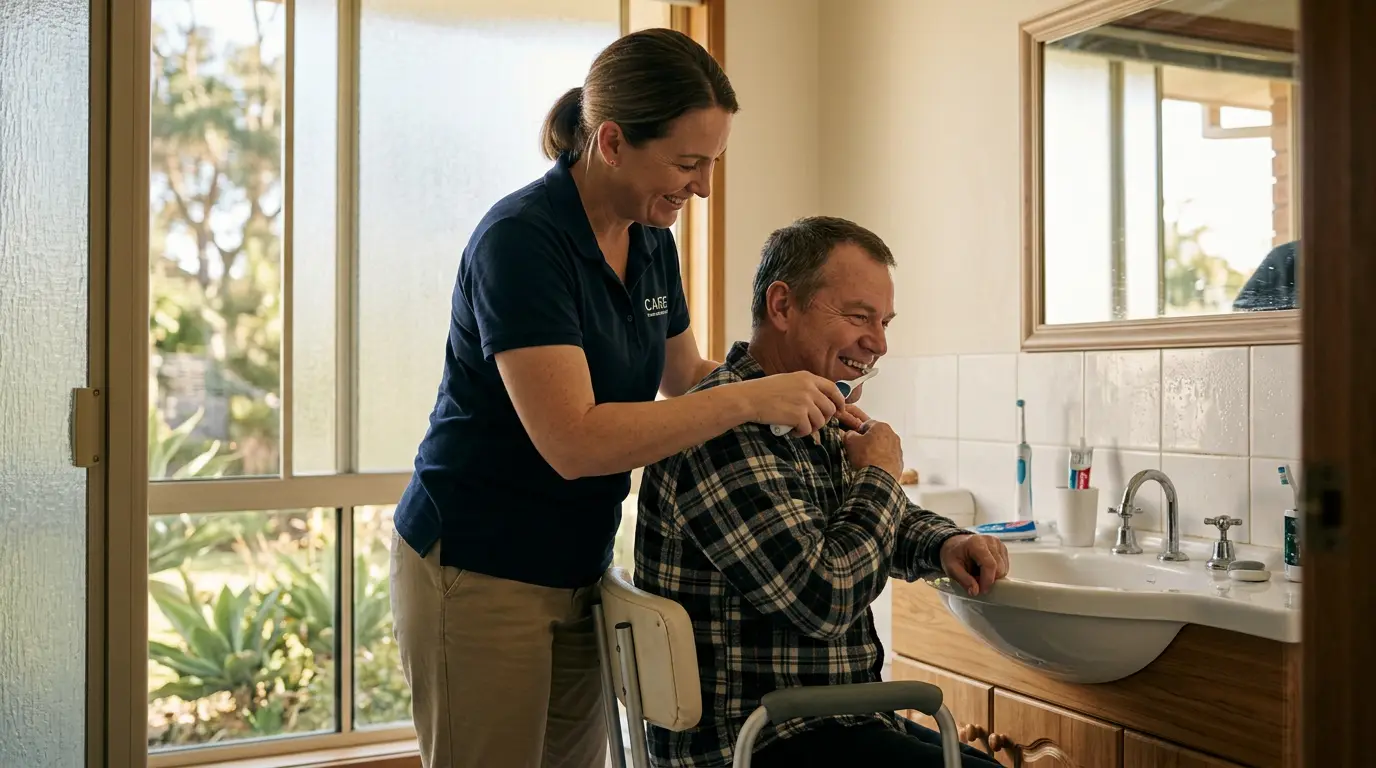
Assistance with self-care activities is NDIS-funded personal care: a support worker helps you with showering, dressing, grooming, medication prompts and meals, in your own home, at the times that suit your routine. Coast Transitional Support provides this support across Central Coast NSW.
Who Self-Care Support Is For
This support is for NDIS Participants who find personal tasks hard, unsafe or tiring because of their disability. Some people need a hand with the morning routine and manage the rest of the day on their own. Others need support at several points across the day.
Support is built around your preferences: what you want help with, what you would rather do yourself, and who you feel comfortable having in your home.
You May Be Eligible If
What Self-Care Support Includes
Every plan is different, so the mix below is shaped around what you actually need each day.
Personal Hygiene
Showering, bathing, toileting and grooming, done at your pace and with dignity.
Dressing and Getting Ready
Help choosing clothes, dressing and undressing, and getting set for the day or settled for the evening.
Mobility Support
Steadying transfers, moving safely around your home and using mobility aids with confidence.
Medication Prompts
Reminders and supervision so the right medication is taken at the right time, following your care plan.
Meal and Eating Assistance
Preparing a simple meal, support with eating and drinking, and making sure you stay hydrated.
What a Typical Visit Looks Like
Your support worker arrives at the agreed time and checks in on how you are feeling that day. Together you work through the routine you have set, whether that is a shower, getting dressed, a prompt to take morning medication and a simple breakfast, with as much or as little hands-on help as you want.
There is no rush and no script. The visit finishes when you are comfortable and set up for the rest of your day.
Self-Care Activities and Household Tasks Are Different
The easiest way to tell them apart: self-care is about your body and your personal routine, household tasks are about the home around you. Showering, dressing and taking medication sit here. Cleaning, laundry and mowing the lawn sit under Assistance with Household Tasks.
Both are funded from the same Assistance with Daily Life category, so many Participants combine them in one visit. A support worker can help you shower and dress, then put a load of washing on before they leave.
How Self-Care Support Is Funded
Self-care sits under Core Supports, in the Assistance with Daily Life category of your NDIS plan. Because Core funding is usually the most flexible part of a plan, you can often shift hours between self-care, household tasks and other Core supports as your needs change.
As of September 2026, flexibility rules differ between older plans and newer PACE plans. Check what your specific plan allows before locking in a service agreement, or ask us and we will check with you.
How to Arrange Personal Care
Start by checking the Core Supports section of your plan. If personal care is not clearly funded, note the tasks you find difficult and raise them at your next plan review or with your LAC.
Most Participants arrange support through NDIS Support Coordination. Your coordinator finds suitable workers, agrees on times and rates, puts the service agreement in place and stays across how things are going. Call us on 0412 223 789 and we can start that conversation.
Common Questions About Self-Care Support
It covers hands-on help with personal tasks: showering, bathing, toileting, dressing, grooming, mobility around the home, medication prompts, and help with eating and drinking. The common thread is your own body and daily routine, not the housework around you.
It sits in Core Supports, within the Assistance with Daily Life category. Core funding is generally the most flexible part of a plan, so hours can often be adjusted as your needs change. As of September 2026, flexibility rules differ between older plans and newer PACE plans, so confirm against your current plan.
Self-care is about you: your body, hygiene and personal routine. Household tasks are about your home: cleaning, laundry, meal preparation for the household and yard maintenance. Both sit under Assistance with Daily Life, and many Participants use a mix of the two.
Yes. You can tell us what matters to you, whether that is gender preference, language, personality or experience with a particular disability, and we match you with someone who fits. If the fit is not right, you can ask for a change at any time.
If you already have Core Supports funding, you can usually start using it for personal care straight away. If you do not, talk to your Support Coordinator, LAC or planner about your daily support needs before your next plan review, and bring examples of the tasks you find difficult.
Personal Care Support Across the Central Coast
Our support workers live locally, from the Peninsula through to the Northern Lakes.